The Privacy Argument That Never Was
I Have Nothing but Red Herring to Hide
The “nothing to hide” defense is the oldest distraction on the web. The real question — who gets to choose what you share? — is about to reshape how we build everything.
Somewhere along the trail, the hounds lose the scent.
That’s the idea behind a red herring: a fish, cured and smoked until it’s rank enough to drag a pack of tracking dogs off the path. It doesn’t matter what the hounds were following. The moment that fish crosses the trail, the chase is over. The dogs are in the woods chasing something that was never the point.
The “I have nothing to hide” argument is the red herring of the digital age. It gets dragged across every serious conversation about privacy — usually at the moment someone asks for consent, or after a site is caught tracking users — and the whole discussion pivots. Suddenly we’re not talking about power, consent, or surveillance. We’re talking about whether you, personally, are a decent person with secrets. And that’s a question nobody should have to answer in order to deserve privacy.
Privacy was never about hiding. It’s about choosing. The reader at ThePrivacyDad put it flatly: the “I-have-nothing-to-hide” argument is a red herring; the real privacy argument is about who gets to choose what to share.
Nothing to hide, everything to choose
Let’s take the claim at face value. You, the person reading this, have nothing to hide. No priors, no embarrassing search history, no secrets worth a headline. Fine. That’s not the point. The point is whether you get to decide what people see.
Think about the last room that made you feel private — a bedroom, a bathroom, a conversation behind a closed door. You don’t use those spaces because you’re hiding something. You use them because they’re yours. You close the door not to conceal yourself but to control your space. A bank vault isn’t there because the bank is a front for something illegal; the vault exists because the contents are valuable, and the owner decides who accesses them.
Your personal data is the same. Your medical history, your location trail, the pattern of your daily life reconstructed from a thousand small data points — those are valuable. They are yours. When a site decides, without your informed consent, to harvest them, it hasn’t discovered that you’re hiding something. It has simply taken the choice away from you.
That’s why the “nothing to hide” argument is such an effective distraction. It reframes a question of power into a question of shame. And the person who feels they have to prove their innocence has already lost control of the conversation.
The user’s red herring is the developer’s opportunity
Here’s where the argument stops being philosophical and becomes practical — for you, specifically. You’re a web developer, an independent professional, an agency owner. You build the web. Every script you load, every pixel you place, every cookie you set: you’re making choices for your users.
And your users are the ones saying “I have nothing to hide.” Meanwhile, those same users are surrounded by hidden trackers — tiny pixel beacons, device fingerprinting scripts, cross-site tracking tools designed to follow them without knowledge or consent. The average user doesn’t know a fraction of what’s being collected, or who’s collecting it, or where it eventually ends up.
The web development market has become brutally competitive. Mature industries attract a lot of competitors, and it gets harder to win new clients every year. But here’s what those clients don’t tell you: they’re tired. They’re tired of being watched, of being scammed, of having their customers’ data breached, of paying for security products that don’t actually fix the underlying fracture.
Because the fracture isn’t technical. It’s foundational.
What comes after the web? The answer starts with an infrastructure that was never built.
Way back in 2005, MIT Technology Review was already reporting it: the internet is broken. Since then, things have only gotten worse. Spam brings phishing, phishing delivers malware, malware builds botnets. Identities and cash are stolen in batches. And now, artificial intelligence in the hands of thieves and fraudsters is making everything worse — and worse faster.
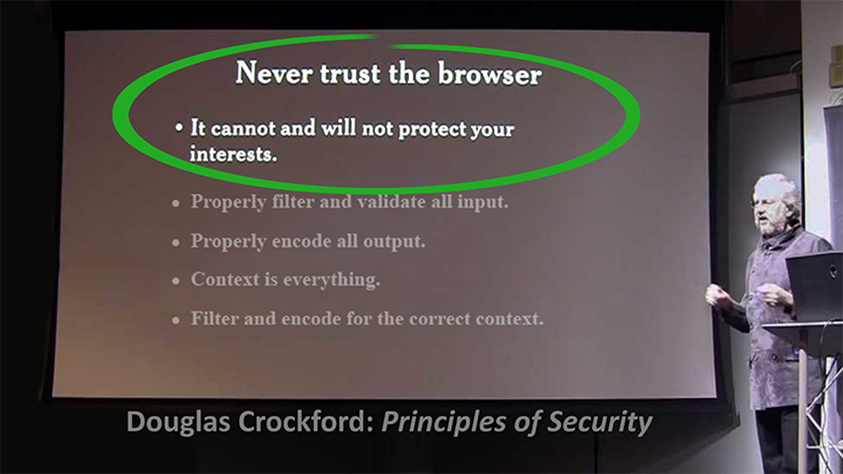
Famous security expert Douglas Crockford says it plainly: “Never trust the browser.” At first that sounds like a joke. It isn’t. He means the browser is a compromised environment — an environment that was never designed for accountability. You may have heard the expression “Necessity is the mother of change.” The necessity here is solving the problems of online fraud, theft, malware, breaches, and surveillance. And if you’re part of the solution, you will have an abundance of new clients.
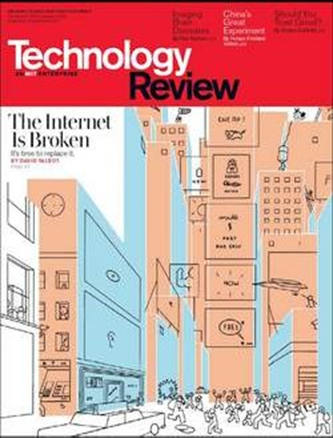
“The Internet Is Broken.” MIT Technology Review said it 20 years ago. Today it still is — and it’s worse.
From the information highway to the digital buildings
The internet used to be called the “Information Highway,” and the name still fits. Highways take us from public, outdoor places to bounded, indoor spaces called buildings. A building is an accountability space: you tend to know who is in a room with you. You wouldn’t mistake the highway for the building — the highway is how you arrive; the building is where you live, where you work, where you close the door.
So where are the digital buildings on the web? Where are the indoor spaces you reach via the web — places that are not parts of the web itself, but rooms you enter through it?
They don’t exist yet. That’s the gap.
The construction material for those digital buildings is called Real Estate Markup Language — REML, also known as HTML10. It is the foundation of the InDoors Infrastructure, and it is the piece of a much larger framework called the Quiet Enjoyment Infrastructure (QEI).
“Quiet enjoyment” is a real estate term that sums up what a tenant is entitled to in a lease: security, privacy, convenience, and effectiveness in a habitable space. The digital spaces where we work, socialize, and learn deserve the same. QEI is a set of inventions, plans, and standards that can be universally deployed to provide online authenticity — measurable trustworthiness of assertions — built on a simple premise: Identity Is The Foundation Of Security.
Twelve components, three groups
QEI has twelve components, organized into three groups. HTML10 lives in the Places group — it’s how digital spaces get built. But it only works in concert with the other two groups, People and Things.
People
The Authenticity Infrastructure — PEN, public authority, enrollment, identity reliability, personal information ownership. Who you are, verified.
Places
The InDoors Infrastructure — building codes, tectonics, professional licensing, community, public roadways. HTML10 is here.
Things
The Ontology Infrastructure — the shared language that lets systems talk about identity consistently.
If you’ve worked on the web for any length of time, you’ve felt the consequences of missing accountability spaces. You’ve seen what happens when every exchange happens between anonymous parties: fraud flourishes, trust is scarce, and users grow wary even as they depend on the web more. QEI is the direct answer to that.
Accountable anonymity — the definition that changes everything
Here’s the core idea that makes HTML10 worth understanding. Authenticity™ is the condition that exists in a space where there are digital signatures everywhere, backed by measurably reliable identity certificates, owned by their users, providing privacy via accountable anonymity.
What is Authenticity™?
- Digital Signatures Everywhere — tamper-evident, verifiable, built into the fabric of the space.
- Backed by Measurably Reliable Identity Certificates — not self-asserted, not corporate-controlled; certified and reliable.
- That are Owned by their Users — your identity is your property, not a platform’s asset.
- And which provide Privacy via Accountable Anonymity — privacy for yourself, and accountability from others.
That last line is the breakthrough. Most people assume privacy and accountability are opposites. They’re not. In a physical building, you can walk into a room without announcing your entire biography, but the people in the room know who you are. That’s the balance the physical world has managed for centuries, and it’s precisely the balance the digital world has failed to achieve. HTML10’s accountable anonymity restores it: privacy for yourself, accountability from others. You can be both honest and anonymous. You can be both safe and open.
Learn about digital signatures and identity certificates in this short video →
Help shape the next chapter of the web
We’re building HTML10 for developers who build the web. Answer a few quick questions and we’ll send you campaign updates, the free ebook Escape the Plantation, and early access to new InDoors tooling.
Where you fit in
This is the part I find most exciting, and I think you will too. Independent web developers and agencies are not spectators in this change — they’re the ones who build it. HTML10 isn’t a platform owned by a giant corporation. It’s a set of open standards, specifications, and components designed to be implemented by professionals like you.
If you’ve found that the web development business has become more competitive, that it’s harder to get the attention of clients — you’re not alone. That’s what happens in mature industries. But those who anticipate the way their industry is changing are the ones who serve the new needs of new clients. The need for secure, accountable, private digital spaces is not a niche. It’s the next business model.
Start digging into the specifications directly from the source — these are community-facing PDFs from the QEI project:
- QEI Component 8 — Tectonics
- QEI Component 9 — Professional Licensing
- QEI Component 10 — Community
- QEI Component 11 — Public Roadways
Want the bigger picture before going deep? The What is Authenticity™? site holds the full lecture series — from the quiet enjoyment revolution to how PKI “done right” changes everything. The Authenticity Institute shows why this works where security technology has failed, and why the ATM-card model of identity beats the “determine the intentions of the bitstream” model we’ve been stuck with.
The cooperative behind the change
No single company is going to fix the internet alone. That’s why the Authenticity Alliance was built as a cooperative — similar to agricultural cooperatives in the physical world — whose purpose is to grow Authenticity and bring it to the digital world. Each member enterprise solves a particular inauthenticity problem in its chosen market: Geneva Privacy for secure, accountable cloud hosting under Swiss law; Spyfree for ridding spaces of tracking; the Council of Attestation Officers for identity attestation done properly.
Each enterprise shares a common mission: creating spaces of accountable anonymity where digital signatures, reliable identity certificates, and privacy protection work together to solve real-world inauthenticity problems. Customers and members of any Authenticity Enterprise are automatically eligible to become Individual Members of the Alliance — and you can also join directly.
The web I’m describing isn’t hypothetical. The question was asked on video years ago: “What comes after the web?” The answer is not a new techno-trinket. It’s an infrastructure that finally gives digital spaces what physical buildings have always had — real security, real privacy, and real accountability. The word “Authenticity” identifies a digital or physical space of accountable anonymity in which people enjoy both privacy for themselves and accountability from others.
And that’s not something a corporate platform can give you. It’s something builders construct. It’s something you construct.
Take the flight before you build
Experience the destination first. The Flight to the Authentiverse is a short interactive journey into what everyday life looks like when authenticity is the foundation.
Take the Flight to the Authentiverse →“No problem can withstand the assault of sustained thinking.”
— the working philosophy of the Authenticity AllianceI’m going to close with the same honesty I started with. You may still feel like you have nothing to hide — and that’s fine. But consider this: the architects of today’s surveillance web built it precisely so that you would feel that way. The moment you say “I have nothing to hide,” you hand them the keys to the vault. The moment you ask instead “who gets to choose what I share?” you’re already building something better.
Get the free ebook — Escape the Plantation
Silicon Valley, the NSA, and the botnet builders intend to own you. This book is the escape plan. Subscribe and we’ll send it to your inbox immediately.
Also available directly from PKI Press.