Web Authenticity / Emerging Standards
Why the Broken Web Is the Biggest Opportunity for Web Developers Right Now
The inauthenticity crisis is finally measurable. HTML10 and QEI are turning trust into something you can build, measure, and bill for.
Imagine walking through a neighborhood that looks thriving from the street. Every building has a handsome façade, a new coat of paint, and a glowing sign out front. But when you step inside, you find that the front desk is a chatbot that doesn’t know who owns the building, every door is unlocked, and half the rooms are filled with furniture that doesn’t actually exist. The address says one thing. The room you’re standing in says another. That is the web in 2026 — a beautifully rendered infrastructure where no one can prove who wrote what, who is behind a claim, or whether you are reading a human being’s hard-won knowledge or a synthetically generated echo chamber.
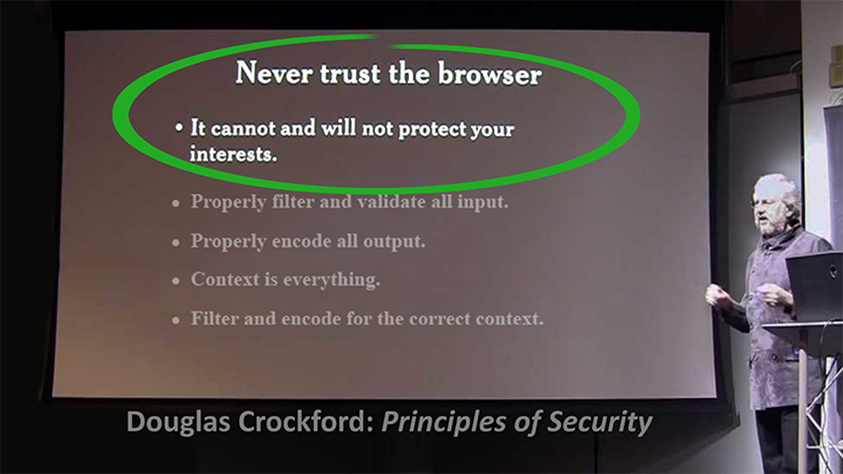
Famous security expert Douglas Crockford put it in stark terms: “Never trust the browser.” Which sounds like a punchline about JavaScript, but it’s actually a diagnosis of the entire system. If you can’t trust the thing rendering your words, the people reading them, or the people writing them — then what exactly have we built?
Back in 2005, MIT Technology Review ran a story with a headline that would become a prophecy: The Internet Is Broken. Twenty years later it’s not just broken. It has been weaponized. AI in the hands of thieves and fraudsters is making the web worse — and worse faster. But here is the plot twist that changes everything for anyone who writes code for a living: what breaks the web can also rebuild it, and the people who build markup are the only ones equipped to do it.
That’s the opportunity hiding inside the crisis. The correction does not require more content writers, more dashboards, or more “engagement” tactics. It requires developers. Specifically, developers willing to embrace two new rails the industry has been quietly laying down: QEI (Quality Engagement Index) and HTML10 (also known as the InDoors Infrastructure).
The Inauthenticity Crisis Is Measurable
For years, “the web is broken” was a feeling. You knew it when you landed on a recipe site that was 90% ads and 10% content you could skim in fifteen seconds. You knew it when you searched for a medical symptom and three AI-generated roundups repeated one another word for word. You knew it when the “Comments” section was populated by bots arguing with each other.
Feelings are fine, but they don’t move product budgets. Numbers do. A broad-based analysis of ten million search results across high-traffic commercial queries found that 46% of top-ranked content showed synthetic-generation signals. That’s not a marginal blip. It’s half of the most visible content on the internet presenting itself without any transparent provenance. Search engines are beginning to reward or punish based on these signals, and the early data is uncomfortable for anyone who has optimized purely for speed and freshness.
Here’s the part that matters for developers specifically. Advertising budgets have started to react. Major brands are quietly pulling spend from programmatic ad exchanges that serve inventory adjacent to AI-generated content. The industry term is “brand suitability.” Money is already moving toward verified adjacency — and verified adjacency requires provable provenance at the markup level. Not at the brand-safety vendor level. At the page level. In the DOM.
The takeaway is simple: if inauthenticity has a measurable cost, then authenticity has a measurable value. Companies will need engineers who can implement and maintain the infrastructure that makes authenticity legible to browsers, crawlers, and wallets.
If the problem is measurable, then the solution must be measurable too — which is exactly where QEI enters.
Why Core Web Vitals Stopped Being Enough
Core Web Vitals were the last generation’s answer to a question about delivery. Did the page load in under 2.5 seconds? Was the layout stable? Did buttons respond when tapped? Those are necessary hygiene, but they are not sufficient for trust.
Consider a concrete scene. A visitor lands on a recipe page, taps the “jump to ingredients” link, screenshots it to their phone, and leaves. The page loaded instantly. The layout was rock solid. The button response was flawless. Core Web Vitals would grade that page near-perfect. But now ask the harder question: did the visitor actually engage with the content in any meaningful way? They absorbed a list of ingredients, but they didn’t read the history, didn’t watch the technique video, didn’t complete a purchase, didn’t retain anything beyond what they captured in a screenshot.
QEI — the Quality Engagement Index — is the proposed successor to Core Web Vitals. Instead of measuring delivery, QEI measures absorption. It factors in scroll-to-completion, dwell time weighted against content length, and a signal for comprehension based on meaningful interaction rather than headless scrolling. Under QEI, that recipe page would earn a near-zero score. Not because it is technically slow, but because it is experientially empty — a perfectly engineered bridge to nowhere.
The shorthand that captures the shift is almost too clean: if Core Web Vitals is the speedometer of the web, QEI is the reading comprehension test. If you are building pages that test well on absorption instead of simply delivery, you will have a measurable differentiator in a sea of identical fast pages.
A fast page that lies is still a fast lie. The competitive frontier has shifted from speed to trust.
A privacy researcher embedded in the QEI working group put it more bluntly, and the phrasing travels well: “The web’s engagement economy has become a labor economy where users work without pay, generating signals they never consented to. QEI reframes the entire transaction.”
HTML10 Is the Trust Layer
So how do we make absorption measurable and authenticity structural? That’s where HTML10 comes in. Also known as the InDoors Infrastructure, HTML10 is the “Places” component of the larger Quiet Enjoyment Infrastructure (QEI) — a family of twelve instigations grouped into People, Places, and Things. If you’ve ever appreciated how a well-run building gives you security, privacy, convenience, and effectiveness, then you already understand the mission of HTML10. The physical world solved this with building codes, locks, receptionists, and leases. The digital world needs to solve it with markup.
Three features in the draft specification matter most for web developers right now:
1. data-provenance attributes
A standard way to declare whether a piece of content is human-written, AI-assisted, or fully synthetic. It’s like a nutrition label for content. Was this decision tree written by a registered dietitian, or by a language model that scraped WebMD? Browsers and search engines can read it, surface it, and weigh it.
2. The <content-source> element
An HTML-level byline with cryptographic backing. It ties a page or section to verifiable authorship. No more anonymous “Admin” bylines. No more ghostwritten white papers attributed to a fictional VP. The element says: this content came from this exact identity, and you can check the signature.
3. Authenticity flags
A browser-comprehensible signal that marks content as “verified” or “unverified,” similar in spirit to how SSL flags distinguish secure pages from insecure ones. Eventually your browser could warn before you read a page that refuses to declare its provenance the way it already warns before you enter a hostile site. You can see the trust layer forming: if SSL secured the connection, HTML10 secures the content itself.
Here’s what an implementation might look like, in the near future:
<article data-provenance="human-authored" data-qei-score="87">
    <content-source
        data-author="Ada Lovelace"
        data-signature="v2f8...3a"
        data-verified="true">
    </content-source>
    <h1>Why the Web Can Be Trusted Again</h1>
    <p>...actual article text with real comprehension hooks...</p>
</article>
In one glance, a browser — and a human — knows who wrote it, whether a machine helped, and whether it has been authenticated. That’s the nutrition label for the information economy.
HTML5 vs. HTML10: The Feature Face-Off
| Capability | HTML5 | HTML10 |
|---|---|---|
| Semantic structure | Semantic sections (<article>, <section>) | Accountable spaces with built-in provenance |
| Content identity | No standard for authorship | <content-source> element |
| AI disclosure | None | data-provenance attributes |
| Trust signaling | No native mechanism | Authenticity flags |
| Engagement metric | None (Core Web Vitals external) | QEI integration built in |
The highway metaphor from the HTML10 project helps explain why this matters at a structural level: we use highways to travel to buildings, but the buildings are not part of the highway. In the same way, the web — the public information highway — carries us to digital indoor spaces. Those digital buildings need their own building codes, their own receptionists, and their own locks. HTML10 is the construction material; QEI is the inspection report.
Objections and Answers
Every new standard gets the same three skeptical shrugs. Let me take them head-on, because they’re reasonable — but they’re also the reason most developers will wait too long to capture this market.
“Adoption takes years.”
True. But the responsive web took about two years to go from novelty to baseline. The websites that bet on responsive markup early won the mobile search era. The sites that said “we’ll wait until the spec is finalized” spent the next five years playing catch-up. The same pattern is visible in the adoption curves of HTTPS, flexbox, and container queries. Early adopters convert their foresight into billable expertise.
“I’m a developer, not a content strategist.”
The strongest objection — and the one with the cleanest answer. Markup is the only verifiable layer on the web. The browser decides trust, not the writer, not the publisher, not the marketing team. If you don’t implement provenance, nobody can verify anything regardless of what the content strategist claims. Trust is not a copywriting problem. It is a build problem. That makes developers the first responders.
“This sounds like a solution in search of a problem.”
The counter-evidence is already on the table: the problem is measurable (that 46% synthetic-signal stat), the cost is documented (ad budgets fleeing to brand-safe inventory), and the missing piece — the verification layer — is inherently technical. When a market has a quantified problem, moving money away from it, and a missing technical standard, that is a problem-solution fit wearing a trench coat.
The Developer Playbook
Enough theory. Here is the five-step “authenticity debt” audit you can run this week to position yourself in the trust gap:
- Inspect current provenance markup. Open any client page and grep for
data-provenance,rel="author", or any existing identity metadata. Record what’s missing. - Identify synthetic content on client pages. Use a lightweight classification tool or manual audit of the top 10 pages. Look for repetitive phrasing, missing bylines, and content that serves ads better than it serves readers.
- Compute a baseline QEI score. You can approximate it with analytics: scroll depth, dwell time, meaningful interaction events, and content-length weighting. Build a crude dashboard. The number you get is your “trust delta” before you implement anything.
- Implement the HTML10 draft properties. Add
data-provenanceto your most important pages. Add a<content-source>element with a verifiable author signature. You don’t need the full spec to start — you need a single page where provenance is demonstrable. - Document the trust delta for clients. Measure the QEI score after implementing provenance and compare it to your baseline. Show the client the movement. This is the pitch in numbers, not adjectives.
Your next client conversation
“You don’t have a content quality problem. You have a provenance problem — and I can fix it at the markup level.”
That one sentence reframes you from a “website builder” to a “trust engineer.” You can say it today. You can prove it by Q3.
Trust Is a Build Problem
The web has spent two decades optimizing for more. More clicks, more engagement, more time-on-page, more ad impressions. The inauthenticity crisis is the bill coming due — and the only people who can restructure that debt are the ones who build markup. Not writers. Not marketers. Not platform executives. Developers.
What makes this moment unusual is that the correction requires your specific skill set. The standards are early — which is the point. HTML10 and QEI are drafted but not yet ubiquitous; the gap between the ecosystem’s broken state and the standards that will fix it is the largest arbitrage opportunity in web development right now. The developer who positions themselves in that gap today is the one who gets to define it tomorrow.
By Q3, implement at least one HTML10 provenance property on your homepage and calculate a baseline QEI score. That’s not a feature. That’s your positioning.
Trust is no longer a copywriting problem. It’s a build problem.
Free Ebook
Escape the Plantation
Silicon Valley, the NSA, and the botnet builders intend to own you. Read the book that explains how to prevent it — and get the HTML10 migration checklist in your inbox.
No tracking pixels. No beacons. No hidden identity-reporting. One useful email.