What Comes After the Web? The Answer Could Be the Next Growth Area for Your Agency
Get a head start on the InDoors Infrastructure and the digital buildings that will follow the information highway.
The web was never a place to live. It was a road—fast, public, and always pointing somewhere else. You measured success by movement: hits, visits, traffic. But the most interesting users stopped traveling years ago. They moved in. They spend more than six hours a day inside digital spaces, and they are starting to expect something the web never promised: a home.
This is not a metaphor. This is the next growth area for your agency.
The Highway Is Exhausted
The internet used to be called the Information Highway, and the name still fits. Roads are for passing through. Traffic is the metric, not belonging. Bounce rate is just another way of saying this road led nowhere.
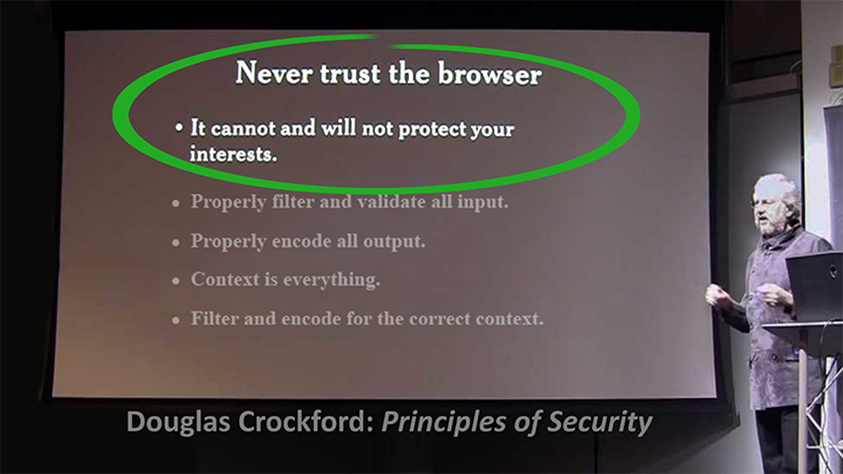
But how do we typically use highways? We use them to get to bounded indoor spaces called buildings. The digital highway was supposed to do the same. It delivered us to pages, but not to places. Security expert Douglas Crockford says, “Never trust the browser.” On a highway, you don’t need to trust anyone. In a building, you do.
Back in 2005, MIT Technology Review told us the internet was broken. We responded by building more lanes. Two decades later, we still have the same problem: a public road system with almost no real estate attached to it.
That is about to change.
What InDoors Infrastructure Actually Is
HTML10, also known as the InDoors Infrastructure, is the Places component of the Quiet Enjoyment Infrastructure—QEI for short. QEI is a set of inventions, plans, and standards designed to provide online authenticity, security, privacy, convenience, and effectiveness in habitable digital spaces.
The full Quiet Enjoyment Infrastructure has twelve components, and they fall into three groups:
- People — The Authenticity Infrastructure
- Places — The InDoors Infrastructure
- Things — The Ontology Infrastructure
Think of QEI as the building code for the post-web world. InDoors Infrastructure is what makes digital environments feel like structures instead of passages. The meta-language behind it is called REML—the Real Estate Markup Language, or HTML10. If HTML5 was the street sign, HTML10 is the foundation.
Webpage = Storefront
You pass by. You glance through the glass. You leave. The owner rents attention, not space.
Digital Building = Store
You step inside. You stay. The owner knows who is there, who is accountable, and who is welcome.
The shift is clean: from presence to premises. Agencies have spent a decade selling online presence. The next decade belongs to agencies that can build and operate digital premises.
Market Signals Are Already Flickering
This is not speculative hype. Analysts at MarketsandMarkets placed the digital twin market at roughly $10 billion in 2021, with projections reaching $73.5 billion by 2027. That is a six-fold expansion in five years. Those are procurement budgets, not press releases.
At the same time, DataReportal’s global research shows internet users now spend more than six hours a day online. Nobody commutes for six hours. They occupy.
Platforms have begun building rooms without calling them rooms. Virtual concerts, branded game worlds, spatial commerce experiences—these are not metaverse fantasies. They are functioning digital buildings, just unlabeled. And every unlabeled building needs somebody to write its code, design its rooms, and manage its identity layer.
That somebody is an agency.
Which Door Will You Open First?
Before we talk about the new service lines, I want to know what you see from where you sit. This helps me point the next blueprint in the right direction.
What This Means for Your Agency
The agency of the future stops selling projects and starts selling premises. Retainers become leases. Deliverables become rooms. Uptime becomes occupancy. Traffic reporting becomes a conversation about who is home, who is trusted, and who is accountable.
Here are the new service lines already taking shape:
- Digital building code audits — mapping a client’s current web presence against the QEI standards and finding the missing foundation.
- Spatial UX and environment design — designing rooms, transitions, entrances, and orientation instead of navigation trees.
- Persistent identity layers — connecting the People infrastructure to Places so tenants are known without being tracked.
- Occupancy intelligence — measuring dwell behavior, trust flow, and return visits instead of bounce rate.
You already practice architecture. Information architecture taught you how to decide which spaces connect and how people move through them. The jump to spatial and environment design is a continuation, not a category break.
The Objection Test
I hear the skepticism. We all watched the metaverse fizzle. But the metaverse was a grand narrative without a floor plan. It promised a destination and never built the corridors. InDoors Infrastructure is the inverse: it starts with the building code.
“Agencies aren’t architects” is the other objection. Tell that to anyone who has structured a sitemap. Clients already pay agencies to decide how digital spaces connect, where value lives, and how identity is managed. The skill stack expands; it doesn’t replace.
This is also why the Authenticity Alliance matters. It is not another platform waiting for users. It is a cooperative of enterprises building the missing People, Places, and Things pieces together. The infrastructure is already open for inspection.
Where to Start
You do not need to wait for a client to ask. You can get ahead of the question the same way you learned responsive design before the client demanded it.
- Audit one client as a building. Where do their customers enter? What rooms do they visit? Where is the service counter? What happens when a session ends—do tenants leave or vanish?
- Read the QEI specifications. Start with the Tectonics component, then the Professional Licensing component. Add the Community component and the Public Roadways component. These are the blueprints.
- Take the flight. The Flight to the Authentiverse is a quick way to feel what inhabitation means, rather than just reading about it. Then explore the Authenticity Alliance and the Authenticity Institute to see the network forming around this shift.
You have already learned the highway. The next decade is about what you build beside it.
The best digital buildings will feel the way the best Apple and Google products feel: calm, considered, almost inevitable. No fuss. No tracking. No creaking infrastructure. Just a space that works the way a well-designed room works—so you forget it was ever a website.
Do not build a web page for the next client. Ask where their customers live when they are not traveling, and build that.
The book is already open. This is the page.
Get the Free Ebook
The next read is Escape the Plantation, a free book about leaving the old surveillance-based web and building spaces where users own their information. Subscribe below and it is yours.
By subscribing, you join the Authenticity Alliance mailing list. Your email is your intellectual property; we treat it that way.